
The digital world is more competitive than ever, and businesses need more than random blog posts or occasional social media updates to stand out. A successful strategy requires a structured and repeatable process that delivers value to audiences consistently. This is where the content marketing cycle becomes essential.
The content marketing cycle is a strategic framework that guides businesses through planning, creating, publishing, promoting, analyzing, and improving content. Instead of producing content without direction, brands can use this cycle to create meaningful campaigns that drive traffic, engagement, leads, and conversions.
Whether you are a startup, an established company, a marketer, or a content creator, understanding the content marketing cycle can help you build authority and achieve long-term growth. In this guide, you will learn every stage of the process, best practices, common mistakes, and strategies to maximize results.
What Is the Content Marketing Cycle?
The content marketing cycle is the continuous process businesses follow to create and manage content effectively. It includes every step from researching audience needs to analyzing performance and refining future campaigns.
Unlike one-time marketing campaigns, the content marketing cycle is ongoing. Each stage feeds into the next, creating a system that evolves over time based on performance data and audience behavior.
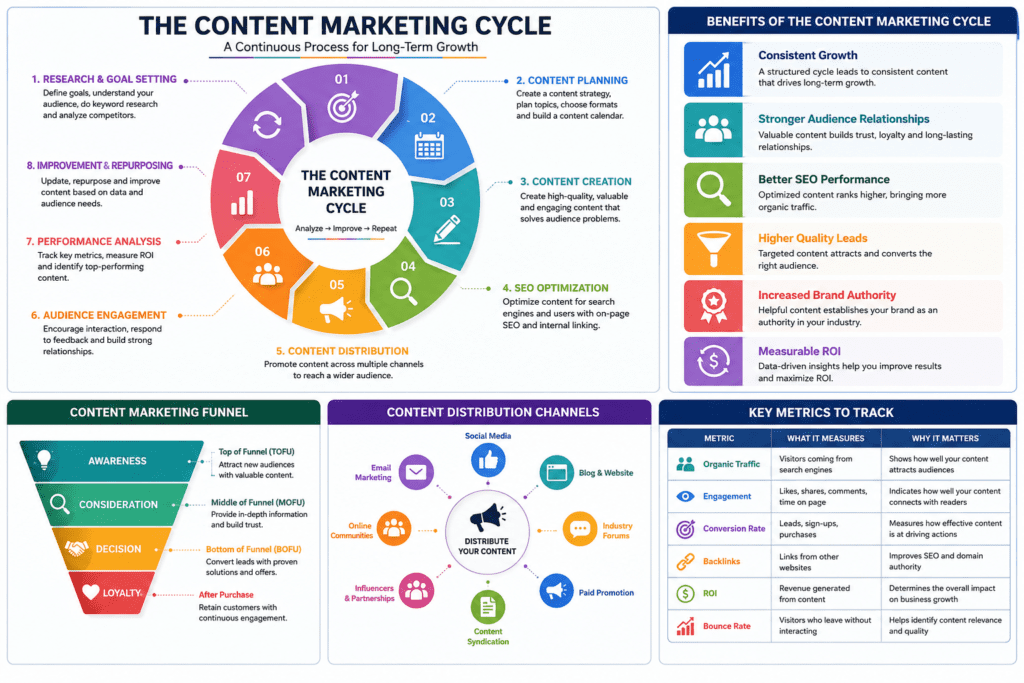
A complete content marketing cycle generally includes:
- Research and planning
- Audience analysis
- Content creation
- Content optimization
- Distribution and promotion
- Performance tracking
- Content improvement and repurposing
When businesses follow this process consistently, they can build stronger relationships with their audience while improving search engine visibility and brand credibility.
Why the Content Marketing Cycle Matters
Many businesses fail with content marketing because they skip important steps. Publishing content without research or optimization often leads to low engagement and poor rankings.
The content marketing cycle helps businesses:
- Create content with a clear purpose
- Improve SEO performance
- Build audience trust
- Generate high-quality leads
- Increase brand awareness
- Maintain consistency
- Measure return on investment
- Continuously improve results
A structured cycle transforms content marketing from guesswork into a strategic growth engine.
Stage 1: Research and Goal Setting
Every successful content marketing cycle begins with research and planning. Without clear goals, content becomes unfocused and ineffective.
Define Your Objectives
Start by identifying what you want to achieve. Common content marketing goals include:
- Increasing website traffic
- Generating leads
- Improving brand awareness
- Boosting sales
- Building authority
- Increasing email subscribers
- Improving customer retention
Your goals should align with overall business objectives.
Understand Your Audience
Audience research is the foundation of effective content. You need to know:
- Who your audience is
- What problems they face
- What content they consume
- Which platforms they use
- What motivates their decisions
Creating buyer personas can help you understand your ideal customers better.
Conduct Keyword Research
SEO plays a major role in the content marketing cycle. Keyword research helps identify what users are searching for online.
Focus on:
- Primary keywords
- Long-tail keywords
- Search intent
- Related keywords
- Competitor keywords
Using the keyword naturally throughout the content improves search visibility.
Analyze Competitors
Competitor research helps identify opportunities and gaps in the market. Study:
- Their top-performing content
- Content formats
- SEO strategies
- Social engagement
- Content frequency
This information can help refine your own strategy.
Stage 2: Content Planning
After research, the next phase in the content marketing cycle is planning.
Create a Content Strategy
A content strategy outlines how your content will support business goals. It should include:
- Target audience
- Content topics
- Content formats
- Publishing schedule
- SEO strategy
- Distribution channels
A clear strategy ensures consistency and direction.
Build a Content Calendar
A content calendar helps organize publishing schedules and maintain consistency.
Include:
- Publication dates
- Content topics
- Keywords
- Target audience
- Distribution channels
- Responsible team members
Consistency is critical for maintaining audience engagement and improving SEO.
Choose Content Types
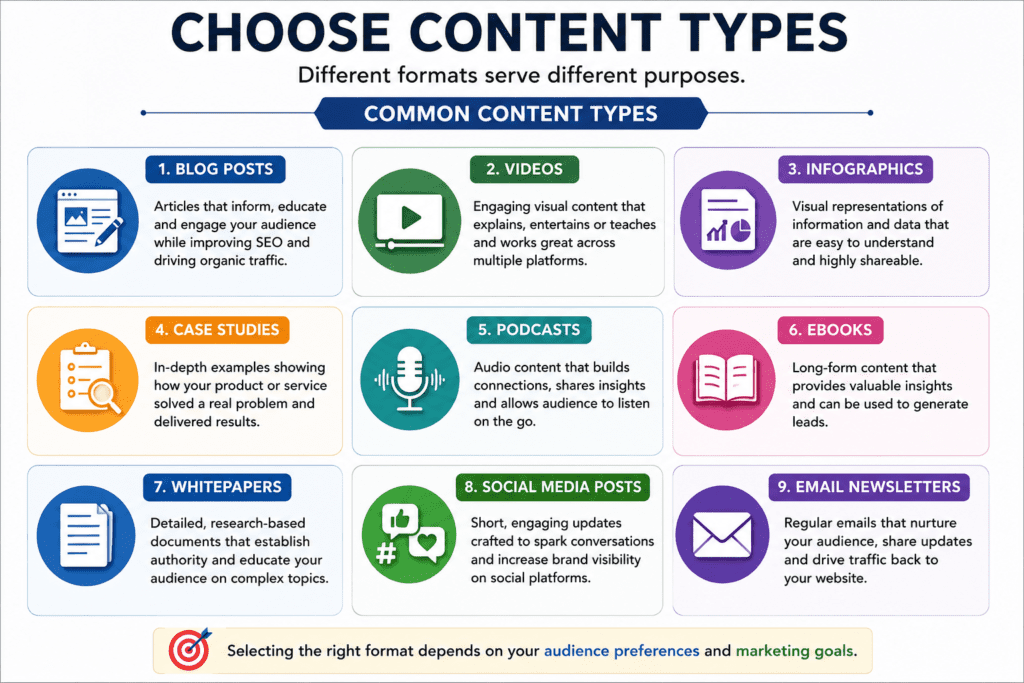
Different formats serve different purposes. Common content types include:
- Blog posts
- Videos
- Infographics
- Case studies
- Podcasts
- Ebooks
- Whitepapers
- Social media posts
- Email newsletters
Selecting the right format depends on your audience preferences and marketing goals.
Stage 3: Content Creation
Content creation is one of the most important stages in the content marketing cycle.
Focus on Value
High-quality content should educate, entertain, or solve problems for the audience. Valuable content builds trust and authority.
Ask yourself:
- Does this content answer user questions?
- Is it original and informative?
- Does it provide actionable insights?
- Is it engaging and easy to read?
Write for Humans First
SEO matters, but user experience matters more. Content should sound natural and conversational while remaining informative.
Avoid:
- Keyword stuffing
- Robotic writing
- Overly complex language
- Unnecessary repetition
Human-focused content performs better with both readers and search engines.
Create Engaging Headlines
Your headline determines whether people click on your content. Strong headlines should:
- Spark curiosity
- Include the main keyword
- Promise value
- Be easy to understand
Effective headlines improve click-through rates and search performance.
Optimize Readability
Readable content keeps users engaged longer. Improve readability by:
- Using short paragraphs
- Adding clear headings
- Using bullet points when necessary
- Writing concise sentences
- Avoiding jargon
Good formatting enhances user experience.
Stage 4: SEO Optimization
SEO optimization is a critical component of the content marketing cycle because it helps content rank in search engines.
On-Page SEO
Optimize every piece of content with:
- Title tags
- Meta descriptions
- Header tags
- Internal links
- External links
- Image alt text
- Keyword placement
These elements improve search visibility and user experience.
Optimize for Search Intent
Search intent refers to the reason behind a user’s query.
Content should match user intent:
- Informational
- Navigational
- Commercial
- Transactional
Understanding intent improves rankings and engagement.
Improve Page Experience
Search engines prioritize websites that provide excellent user experiences.
Focus on:
- Fast loading speed
- Mobile responsiveness
- Easy navigation
- Secure browsing
- Clean design
Technical optimization supports overall SEO performance.
Use Internal Linking
Internal links help users discover related content while improving website structure.
Benefits include:
- Better navigation
- Improved SEO
- Increased page views
- Stronger topical authority
Strategic linking strengthens your content ecosystem.
Stage 5: Content Distribution
Creating content is only half the battle. Distribution is a major stage in the content marketing cycle.
Share Across Multiple Channels
Promote content on:
- Social media
- Email newsletters
- Online communities
- Industry forums
- Content syndication platforms
Multi-channel distribution expands reach.
Leverage Social Media
Different platforms serve different audiences.
For example:
- LinkedIn works well for B2B content
- Instagram focuses on visuals
- Facebook supports community engagement
- X is useful for real-time updates
Tailor your messaging for each platform.
Email Marketing Integration
Email marketing remains one of the most effective distribution methods.
Use email campaigns to:
- Share new content
- Drive website traffic
- Nurture leads
- Promote resources
Personalized emails improve engagement rates.
Collaborate With Influencers
Influencer partnerships can increase visibility and credibility.
Benefits include:
- Expanded reach
- Audience trust
- Higher engagement
- Better brand awareness
Choose influencers relevant to your industry.
Stage 6: Audience Engagement
Engagement is a vital part of the content marketing cycle because it strengthens relationships with audiences.
Encourage Interaction
Invite readers to:
- Leave comments
- Share content
- Ask questions
- Participate in polls
Interactive content creates stronger connections.
Respond to Feedback
Engaging with your audience builds trust and loyalty.
Respond to:
- Comments
- Messages
- Reviews
- Social media mentions
Active communication improves brand perception.
Build a Community
Communities create long-term brand advocates.
Ways to build community include:
- Facebook groups
- LinkedIn communities
- Online forums
- Webinars
- Live events
Community engagement strengthens customer relationships.
Stage 7: Performance Analysis
Measuring results is essential in the content marketing cycle.
Track Key Metrics
Monitor metrics such as:
- Organic traffic
- Bounce rate
- Time on page
- Conversion rates
- Social shares
- Backlinks
- Engagement levels
These insights reveal what works and what needs improvement.
Use Analytics Tools
Popular tools include:
- Google Analytics
- Google Search Console
- Ahrefs
- SEMrush
- HubSpot
Analytics tools provide valuable performance data.
Measure ROI
Content marketing should contribute to business growth.
Evaluate:
- Lead generation
- Sales impact
- Customer acquisition
- Revenue growth
Tracking ROI helps justify marketing investments.
Identify Top-Performing Content
Analyzing successful content reveals patterns that can guide future strategies.
Look for:
- Popular topics
- High-performing keywords
- Best content formats
- Successful distribution channels
Data-driven decisions improve results over time.
Stage 8: Content Improvement and Repurposing
The final stage of the content marketing cycle involves optimization and refinement.
Update Existing Content
Refreshing old content can improve rankings and relevance.
Update:
- Statistics
- Examples
- Links
- Keywords
- Formatting
Regular updates keep content competitive.
Repurpose Content
Repurposing extends content lifespan.
Examples include:
- Turning blogs into videos
- Converting webinars into articles
- Creating infographics from reports
- Transforming podcasts into social posts
Repurposed content maximizes ROI.
Remove Underperforming Content
Not all content delivers value.
Audit your website regularly and:
- Improve weak content
- Merge similar pages
- Remove outdated pages
Content pruning strengthens overall site quality.
Common Mistakes in the Content Marketing Cycle
Many businesses struggle because they make avoidable mistakes.
Ignoring Audience Needs
Content focused only on sales often fails. Prioritize audience value.
Publishing Inconsistently
Irregular posting weakens audience trust and SEO performance.
Neglecting SEO
Without optimization, even excellent content may remain invisible.
Failing to Analyze Data
Ignoring analytics prevents improvement and growth.
Overlooking Content Promotion
Great content requires active distribution to succeed.
Best Practices for a Successful Content Marketing Cycle
To maximize success:
- Create audience-focused content
- Maintain consistency
- Optimize for SEO
- Use multiple distribution channels
- Analyze performance regularly
- Update content frequently
- Focus on quality over quantity
Consistency and adaptability are key to long-term growth.
How AI Is Changing the Content Marketing Cycle
Artificial intelligence is transforming modern content marketing.
AI tools can assist with:
- Keyword research
- Content ideas
- SEO analysis
- Personalization
- Automation
- Performance tracking
However, human creativity and strategic thinking remain essential for authentic and valuable content.
The Future of the Content Marketing Cycle
The future of content marketing will focus on:
- Personalized experiences
- Interactive content
- Video-first strategies
- Voice search optimization
- AI-driven insights
- Omnichannel marketing
Businesses that adapt to evolving trends will remain competitive.
FAQ
What is the content marketing cycle?
The content marketing cycle is the ongoing process of planning, creating, optimizing, distributing, analyzing, and improving content to achieve marketing goals.
Why is the content marketing cycle important?
It helps businesses create strategic, consistent, and effective content that drives traffic, engagement, and conversions.
How long does the content marketing cycle take?
The timeline varies depending on content type, goals, and distribution methods. However, content marketing is generally a long-term strategy.
What are the main stages of the content marketing cycle?
The main stages include research, planning, creation, optimization, distribution, engagement, analysis, and improvement.
How does SEO fit into the content marketing cycle?
SEO helps content rank higher in search engines, increasing visibility and attracting organic traffic.
Can small businesses benefit from the content marketing cycle?
Yes, small businesses can use the content marketing cycle to build authority, attract customers, and compete effectively online.
How often should content be updated?
Content should be reviewed regularly, especially if it contains outdated information, declining traffic, or changing industry trends.
Conclusion
The content marketing cycle is the foundation of a sustainable and successful digital marketing strategy. Instead of creating random content without direction, businesses can use a structured approach to produce meaningful and high-performing content consistently.
From research and planning to optimization and performance analysis, every stage of the cycle plays an important role in achieving long-term growth. Brands that focus on quality, consistency, audience needs, and continuous improvement are more likely to succeed in today’s competitive online landscape.
By mastering the content marketing cycle, businesses can increase visibility, build authority, strengthen customer relationships, and drive measurable results for years to come.

James Robert
James Robert is a seasoned Off-Page SEO expert specializing in strategic link building, digital outreach, and authority growth for businesses aiming to improve search visibility and rankings. With over five years of hands-on experience, he helps brands strengthen their online presence through high-quality backlinks, niche-relevant placements, and ethical SEO practices aligned with Google’s guidelines. James’s core specialties include guest posting, blogger outreach, niche edits, brand mentions, and backlink profile optimization. He is highly skilled at building relationships with authoritative publishers and executing scalable outreach campaigns that drive long-term organic growth. As a contributor to leading marketing platforms, James regularly shares actionable insights on off-page SEO strategies, link acquisition, and sustainable ranking improvements, helping businesses achieve consistent and measurable SEO success.