

Industrial businesses are no longer relying only on trade shows, cold calls, and printed brochures to attract customers. Today, buyers search online before making purchasing decisions. They compare suppliers, read technical guides, and evaluate companies through digital content. This shift has made industrial content marketing one of the most powerful strategies for manufacturers, engineering firms, logistics companies, and industrial suppliers.
Industrial buyers are highly informed. They want detailed information, technical accuracy, and trustworthy expertise before contacting a company. Businesses that provide valuable content consistently gain more visibility, authority, and qualified leads.
Industrial content marketing focuses on creating and distributing useful content specifically for industrial audiences. It helps companies educate buyers, improve search engine rankings, and support long sales cycles. Whether a company sells machinery, automation systems, raw materials, or industrial services, strategic content can significantly increase brand awareness and conversions.
This guide explains everything about industrial content marketing, including its importance, benefits, strategies, content types, SEO practices, lead generation methods, and future trends.
What Is Industrial Content Marketing?
Industrial content marketing is the process of creating educational, technical, and informative content for industrial and manufacturing audiences. The goal is to attract potential customers, build credibility, and generate leads through digital channels.
Unlike traditional advertising, industrial content marketing focuses on solving problems and providing value instead of directly selling products.
Examples of industrial content include:
- Technical blog articles
- Product comparison guides
- Engineering case studies
- Whitepapers
- Video demonstrations
- Manufacturing process explanations
- SEO landing pages
- Industry reports
- Maintenance guides
- Industrial infographics
This type of marketing targets decision-makers such as:
- Engineers
- Procurement managers
- Plant managers
- Manufacturers
- Operations directors
- Industrial distributors
- Supply chain professionals
Why Industrial Content Marketing Matters
The industrial sector has become highly competitive online. Buyers now research extensively before contacting suppliers. Companies without a strong digital presence often lose opportunities to competitors who provide better online information.
Industrial content marketing matters because it helps businesses:
- Increase organic website traffic
- Build trust and authority
- Educate technical audiences
- Support long buying cycles
- Improve lead quality
- Generate inbound inquiries
- Strengthen SEO performance
- Reduce customer acquisition costs
Industrial buyers prefer companies that demonstrate expertise. Informative content creates confidence and positions a business as a reliable industry leader.
How Industrial Buyers Search Online
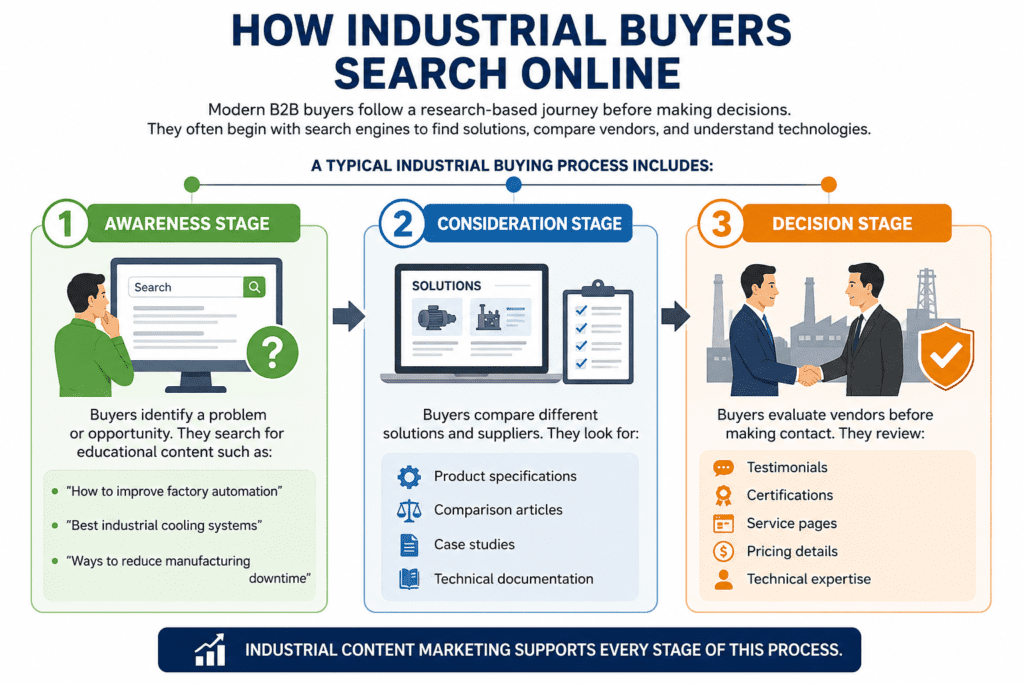
Modern B2B buyers follow a research-based journey before making decisions. They often begin with search engines to find solutions, compare vendors, and understand technologies.
A typical industrial buying process includes:
Awareness Stage
Buyers identify a problem or opportunity. They search for educational content such as:
- “How to improve factory automation”
- “Best industrial cooling systems”
- “Ways to reduce manufacturing downtime”
Consideration Stage
Buyers compare different solutions and suppliers. They look for:
- Product specifications
- Comparison articles
- Case studies
- Technical documentation
Decision Stage
Buyers evaluate vendors before making contact. They review:
- Testimonials
- Certifications
- Service pages
- Pricing details
- Technical expertise
Industrial content marketing supports every stage of this process.
Benefits of Industrial Content Marketing
Increased Organic Traffic
SEO-focused content helps industrial websites rank higher on search engines. High-quality articles targeting industry keywords bring continuous traffic from global audiences.
Better Lead Generation
Educational content attracts visitors who are actively searching for solutions. These visitors are more likely to convert into qualified leads.
Stronger Industry Authority
Technical and informative content positions a company as an expert within its niche.
Long-Term Marketing Value
Unlike paid ads, content continues generating traffic and leads for years.
Improved Customer Education
Industrial products are often complex. Content helps explain processes, applications, and technical details clearly.
Higher Conversion Rates
Buyers trust companies that provide useful information and industry knowledge.
Essential Types of Industrial Content
Blog Articles
Blogs are the foundation of industrial content marketing. They improve SEO visibility and answer industry-related questions.
Examples include:
- Maintenance guides
- Industry trends
- Equipment comparisons
- Manufacturing strategies
- Safety recommendations
Case Studies
Case studies show real-world success stories. They demonstrate how products or services solved customer problems.
A strong case study includes:
- Customer challenge
- Implemented solution
- Results achieved
- Technical details
Whitepapers
Whitepapers provide detailed technical insights. They are commonly used for lead generation.
Industrial companies often use whitepapers to explain:
- New technologies
- Engineering innovations
- Process improvements
- Compliance standards
Videos
Industrial buyers prefer visual demonstrations for machinery and processes.
Popular video content includes:
- Product walkthroughs
- Factory tours
- Installation tutorials
- Equipment demonstrations
Technical Guides
Technical content helps engineers and procurement teams make informed decisions.
Examples include:
- Specification sheets
- Installation manuals
- Operational guides
- Troubleshooting resources
Infographics
Infographics simplify complex industrial data and processes into visual formats.
Email Newsletters
Email marketing helps nurture leads and maintain communication with prospects.
SEO Strategies for Industrial Content Marketing
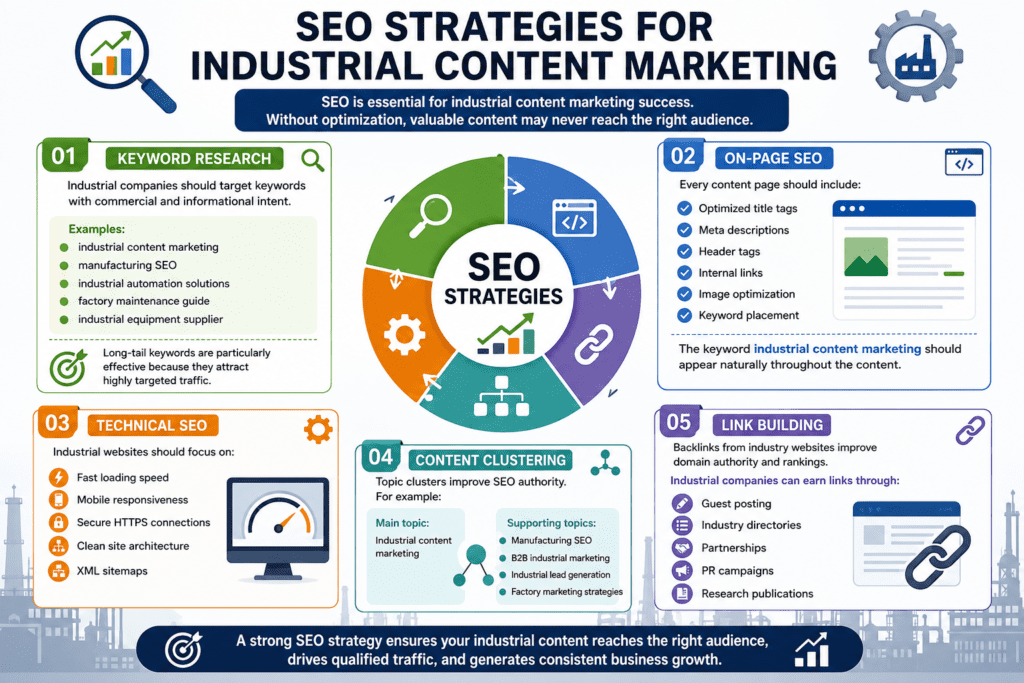
SEO is essential for industrial content marketing success. Without optimization, valuable content may never reach the right audience.
Keyword Research
Industrial companies should target keywords with commercial and informational intent.
Examples:
- industrial content marketing
- manufacturing SEO
- industrial automation solutions
- factory maintenance guide
- industrial equipment supplier
Long-tail keywords are particularly effective because they attract highly targeted traffic.
On-Page SEO
Every content page should include:
- Optimized title tags
- Meta descriptions
- Header tags
- Internal links
- Image optimization
- Keyword placement
The keyword industrial content marketing should appear naturally throughout the content.
Technical SEO
Industrial websites should focus on:
- Fast loading speed
- Mobile responsiveness
- Secure HTTPS connections
- Clean site architecture
- XML sitemaps
Content Clustering
Topic clusters improve SEO authority.
For example:
Main topic:
- Industrial content marketing
Supporting topics:
- Manufacturing SEO
- B2B industrial marketing
- Industrial lead generation
- Factory marketing strategies
Link Building
Backlinks from industry websites improve domain authority and rankings.
Industrial companies can earn links through:
- Guest posting
- Industry directories
- Partnerships
- PR campaigns
- Research publications
Creating an Industrial Content Marketing Strategy
Define Your Audience
Understand your target customers completely.
Identify:
- Industry sectors
- Buyer roles
- Pain points
- Technical challenges
- Purchase behavior
Set Clear Goals
Common goals include:
- Lead generation
- Brand awareness
- SEO traffic growth
- Customer education
- Conversion improvement
Conduct Industry Research
Analyze competitors and market trends to identify content opportunities.
Build a Content Calendar
Consistency is essential. A content calendar helps organize:
- Blog publishing
- Social media posts
- Video releases
- Email campaigns
Create Valuable Content
Industrial audiences prefer accurate and practical information over promotional messaging.
Measure Performance
Track metrics such as:
- Organic traffic
- Bounce rate
- Lead conversions
- Keyword rankings
- Time on page
Challenges in Industrial Content Marketing
Complex Technical Topics
Industrial products often involve technical terminology and engineering concepts.
The solution is to create content that balances technical accuracy with readability.
Long Sales Cycles
Industrial purchases may take months before conversion.
Consistent nurturing through content is necessary.
Limited Internal Resources
Many industrial companies lack dedicated marketing teams.
Outsourcing content creation can help maintain consistency.
Industry Competition
Industrial niches can be highly competitive online.
Strong SEO and authoritative content provide a competitive advantage.
Best Practices for Industrial Content Marketing
Focus on Education
Educational content performs better than aggressive sales messaging.
Use Real Data
Industrial buyers trust statistics, case studies, and measurable results.
Write for Humans First
Content should remain readable despite technical complexity.
Optimize for Search Engines
SEO optimization improves discoverability.
Update Old Content
Refreshing outdated content improves rankings and accuracy.
Include Visual Content
Images, charts, and videos improve engagement.
Promote Across Multiple Channels
Share content through:
- Email campaigns
- Industry forums
- Online communities
Industrial Content Marketing and Lead Generation
Lead generation is one of the biggest advantages of industrial content marketing.
Lead Magnets
Offer valuable downloadable resources such as:
- Technical guides
- Whitepapers
- Checklists
- Industry reports
Landing Pages
Create optimized landing pages for specific industrial services and products.
Calls to Action
Every piece of content should guide visitors toward the next step.
Examples include:
- Request a quote
- Download a guide
- Contact sales
- Schedule a consultation
Marketing Automation
Automation tools help nurture leads with targeted email sequences.
The Role of LinkedIn in Industrial Marketing
LinkedIn is highly effective for industrial companies because it connects professionals and decision-makers.
Industrial brands can use LinkedIn to:
- Share blog content
- Publish industry insights
- Generate B2B leads
- Build authority
- Connect with procurement teams
Consistent LinkedIn activity strengthens brand visibility globally.
Video Marketing for Industrial Businesses
Video marketing is growing rapidly within industrial sectors.
Buyers prefer videos because they simplify complex processes and equipment demonstrations.
Effective industrial video ideas include:
- Machinery operation videos
- Product installation tutorials
- Safety training
- Customer testimonials
- Factory walkthroughs
Videos also improve SEO engagement metrics.
Industrial Content Marketing Trends
AI-Powered Content Research
Artificial intelligence tools help marketers identify trending topics and keyword opportunities.
Interactive Content
Calculators, configurators, and assessment tools improve engagement.
Voice Search Optimization
Industrial companies are beginning to optimize content for voice-based searches.
Data-Driven Personalization
Customized content experiences improve conversion rates.
Sustainability Content
Environmental responsibility is becoming increasingly important in industrial industries.
Content about sustainability practices builds trust and brand reputation.
Common Mistakes to Avoid
Writing Only Promotional Content
Industrial buyers prefer helpful information rather than direct advertising.
Ignoring SEO
Without SEO, even excellent content may receive little visibility.
Publishing Inconsistently
Consistency is critical for long-term growth.
Using Overly Technical Language
Complex terminology can reduce readability and engagement.
Neglecting Analytics
Tracking results helps improve future strategies.
How to Measure Industrial Content Marketing Success
Successful industrial content marketing requires continuous analysis.
Key performance indicators include:
- Organic traffic growth
- Keyword rankings
- Lead generation
- Conversion rates
- Backlink acquisition
- Engagement metrics
- Email signups
Use analytics platforms to identify high-performing content and optimization opportunities.
Future of Industrial Content Marketing
Industrial marketing will continue evolving as digital transformation expands globally.
Future trends include:
- AI-driven personalization
- More video content
- Advanced automation
- Interactive experiences
- Voice search growth
- Predictive analytics
Companies investing in high-quality industrial content marketing today will gain long-term competitive advantages.
FAQ
What is industrial content marketing?
Industrial content marketing is the creation of educational and technical content designed to attract industrial buyers, improve SEO, and generate B2B leads.
Why is industrial content marketing important?
It helps industrial companies increase visibility, educate customers, build trust, and generate qualified leads online.
What type of content works best for industrial businesses?
Blog articles, case studies, technical guides, videos, whitepapers, and SEO landing pages perform particularly well.
How does SEO help industrial content marketing?
SEO improves search engine rankings, making industrial content easier for potential buyers to discover online.
Is industrial content marketing suitable for small manufacturers?
Yes. Small manufacturers can compete effectively online by creating high-quality niche content targeting specific audiences.
How long does industrial content marketing take to show results?
SEO and content marketing typically require several months before generating substantial traffic and leads.
What platforms are best for promoting industrial content?
LinkedIn, email marketing, industry websites, and search engines are highly effective platforms.
Can industrial content marketing generate global leads?
Yes. Optimized content can attract industrial buyers from around the world.
Conclusion
Industrial content marketing has become essential for manufacturers, engineering companies, suppliers, and industrial service providers worldwide. Modern buyers rely heavily on online research before making purchasing decisions, and businesses that provide valuable information gain a significant competitive advantage.
A successful industrial content marketing strategy combines SEO, educational content, technical expertise, and consistent publishing. By creating informative blogs, case studies, videos, and technical resources, industrial brands can increase visibility, generate qualified leads, and establish authority within their industries.
As digital transformation continues shaping global markets, companies investing in industrial content marketing will build stronger customer relationships, improve search rankings, and achieve long-term business growth.

James Robert
James Robert is a seasoned Off-Page SEO expert specializing in strategic link building, digital outreach, and authority growth for businesses aiming to improve search visibility and rankings. With over five years of hands-on experience, he helps brands strengthen their online presence through high-quality backlinks, niche-relevant placements, and ethical SEO practices aligned with Google’s guidelines. James’s core specialties include guest posting, blogger outreach, niche edits, brand mentions, and backlink profile optimization. He is highly skilled at building relationships with authoritative publishers and executing scalable outreach campaigns that drive long-term organic growth. As a contributor to leading marketing platforms, James regularly shares actionable insights on off-page SEO strategies, link acquisition, and sustainable ranking improvements, helping businesses achieve consistent and measurable SEO success.