
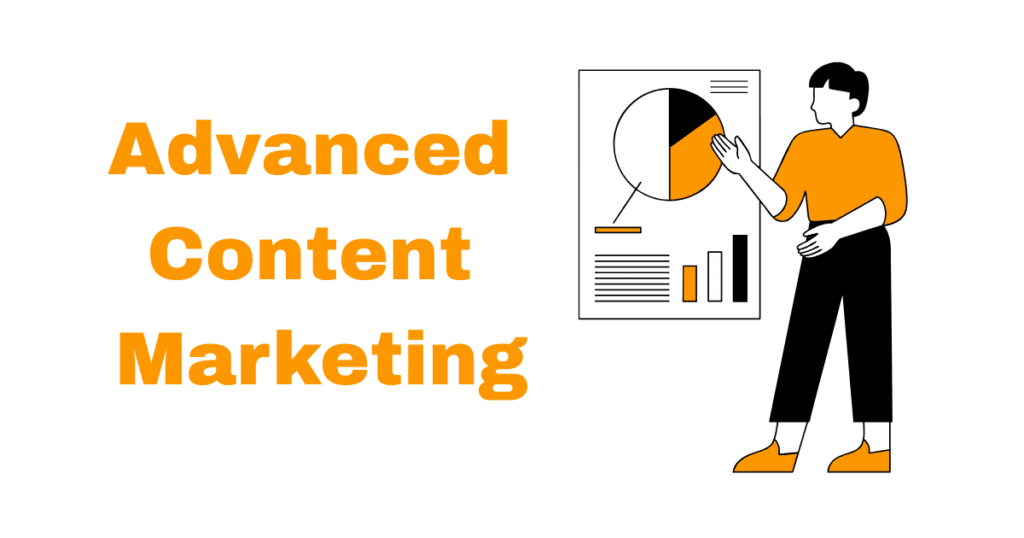
Advanced content marketing is a tactic that takes it a notch higher than simple blogging and social posts. It is data-oriented, personalized, automated, and intent-driven to fuel quantifiable business expansion. As opposed to developing content in order to post it, brands employ sophisticated methods to attract, develop, and convert the right audience at the right time.
In the new competitive digital world, plain content is not sufficient anymore. Companies require more intelligent planning, insight, and optimization. Advanced content marketing is a combination of SEO, inbound strategy, analytics, and user behavior to establish long-term authority and trust.
What Do You Mean by Advanced Content Marketing?
Advanced content marketing is defined as the application of complex techniques, instruments, and models to produce, disseminate, and enhance content on a mass scale. It does not just focus on volume, but rather it focuses on performance, relevance, and user experience. It is aimed to match content with business and customer experience.
This method is based on research, segmentation, content mapping, and measurement, unlike the simplest content production. Brands use data to know what works, why it work and how to work better. The long-term effect of this will be a happy ecosystem that produces results on a regular basis.
The Future of Content Marketing in 2026 and Beyond.
The importance of advanced content marketing is that the digital race is becoming more competitive in all industries. The information overload causes the audiences to become more difficult for audiences to win and maintain their attention. Companies that utilize old content strategies cannot remain visible and relevant.
Using new methods will enable organizations to establish deeper relationships with consumers. This will enhance the visibility of the searches, build brand credibility, and promote long-term growth. It also enables marketers to respond fast to a change in the algorithm and the alteration in user behavior.
Distinction between Simple and Advanced Content Marketing.
Basic content marketing is about posting the content without thorough analysis and optimization. It usually consists of posts on blogs, social media, news, and plain old SEO. As much as it can be useful, it might not produce consistent and scalable findings.
However, sophisticated content marketing is intelligent and strategic. It applies data, audience insights, and performance tracking to make decisions. Each piece of content has an aim, audience, and a quantifiable result.
Content Creation: Knowing Your Viewers in Advanced Content Marketing.
The advanced content marketing lies in audience intent. It means learning about the purpose of the search for information by the users and what they are likely to discover. Unintentionally made content rarely engages and converts.
Through search analysis, interaction patterns, and user experiences, marketers would develop content that satisfies the actual needs. This translates to increased dwell time, improved rankings, and increased trust. The intent-based content also facilitates a smoother conversion between awareness and conversion.
The use of SEO in Advanced Content Marketing.
SEO is essential in advanced content marketing since it will make sure that the content finds the appropriate audience without extra spending. It is related to keyword studies, technical optimization, interlinking, and internal organization of content. SEO is advanced and is concerned with the user experience in addition to search engines.
Instead of filling keywords, marketers optimize content in a natural and contextual way. Topical authority, search intent, and semantic relevance are of primary importance. This is a visibility-enhancing method that does not lose readability and value.
Novel Content Marketing and Inbound Strategy Co-ordination.
The product development of advanced content marketing is in line with the principles of inbound marketing. It does not use interruptive advertising but value-based content to attract users. Every piece of the content has a certain step of the buyer journey.
Content is strategically mapped out from awareness blogs, up to decision-stage guides. Such alignment guarantees the users the provision of appropriate information at each touchpoint. This creates trust with time and develops long-term relationships.
Content Marketing vs Inbound Marketing.
The topic of inbound marketing vs content marketing is popular in online strategy. Content marketing is the process of producing and disseminating valuable content to reach the audience. Inbound marketing represents a more generalized model that involves the utilization of content as a key element.
SEO, email nurturing, lead magnets, and automation are all inbound marketing. The content marketing supplements the inbound by generating relevant content at every step. The gap can be bridged with the help of advanced content marketing, in which content is more strategic and conversion-oriented.
Decision-making based on Data in Advanced Content marketing.
Advanced content marketing is founded on data. Analytics help marketers to gauge performance, take note of gaps, and improve strategies. The metrics used in future content determination include engagement, conversions, and retention.
Teams do not make guesses as to what works, but rather on actual insights. This minimizes the wastage of effort and increases ROI. As time goes on, the data-driven optimization will result in an increase in authority and sustainable growth.
Buyer Journey Content Mapping.
Content mapping is done to make sure the right content is made available to the users at the appropriate time. It underlines subjects with awareness, consideration, and decision phases. It is an essential structure of advanced content marketing.
Through content journeys, the businesses can direct the users through conversion pathways. The strategy enhances the level of engagement and decreases bounce rates. It is also useful in determining missing content opportunities.
State-of-the-Art Content Formats Leading to Results.
High-level content marketing will employ different formats to ensure maximum engagement. These are the long-form guides, case studies, interactive videos, and data-supported reports. All the formats perform a certain role.
A multimedia format will be used to capture the varying preferences of the audience. It also enhances content durability and re-sharability. High-value formats tend to receive backlinks and enhance the performance of SEO.
Promotion and Content Distribution Strategy.
In sophisticated content marketing, content creation is only half the battle. The strategic distribution is involved to make sure content is delivered to the correct audience. This is organic search, social sites, email marketing, and partnering.
The approaches to promotion are platform and audience-specific. This makes it more visible and participative, and less dependent on one channel. Good distribution increases the content’s impact.
Personalization Advanced Content Marketing.
Personalization improves user experience through the provision of such relevant content, depending on user behavior and preferences. The next level of content marketing involves segmentation and automation to personalize on a large scale. This increases engagements and conversions.
Individualized content is more human and worthwhile. It improves connection and promotes repeat engagements. With time, personalization turns out to be one of the competitive advantages.
The Success of Advanced Content Marketing to Measure.
The success can only be measured with clear goals and KPIs. Advanced content marketing measures performance based on various measures like quality of traffic, generation of leads, and revenue influence. The insights are used to optimize.
Its analysis should be done regularly to ensure the strategies are effective and consistent with business objectives. Part of the advanced content marketing philosophy is continuous improvement.
Common Challenges in Advanced Content Marketing
Advanced content marketing comes with challenges such as resource allocation, consistency, and data overload. Without clear processes, teams may struggle to scale effectively. Strategy and planning are essential to overcome these obstacles.
By setting priorities and using the right tools, businesses can manage complexity. Over time, structured workflows improve efficiency and results.
Best Practices for Implementing Advanced Content Marketing
Successful implementation starts with research and planning. Clear goals, audience understanding, and content frameworks are essential. Advanced content marketing thrives on consistency and quality.
Regular audits and updates keep content relevant. Collaboration between SEO, content, and analytics teams ensures alignment. Following best practices leads to long-term success.
Future Trends in Advanced Content Marketing
Advanced content marketing continues to evolve with technology and user expectations. AI, automation, and predictive analytics are shaping the future. Brands that adapt early gain a competitive edge.
Focus will shift toward experience-driven content and deeper personalization. Staying informed helps marketers remain relevant and effective.
Conclusion
Advanced content marketing is no longer optional for businesses aiming for sustainable growth. It combines strategy, data, SEO, and audience insight to deliver meaningful results. By moving beyond basic tactics, brands can build authority, trust, and long-term visibility.
When implemented correctly, advanced content marketing supports inbound strategies and clarifies inbound marketing vs content marketing differences. It empowers businesses to connect with audiences authentically and scale success in an increasingly competitive digital world.
FAQs
What is advanced content marketing?
Advanced content marketing is a strategic, data-driven approach that focuses on performance, personalization, and scalability rather than content volume alone.
How is advanced content marketing different from basic content marketing?
Basic content marketing focuses on publishing content, while advanced content marketing emphasizes strategy, optimization, and measurable outcomes.
Why is SEO important in advanced content marketing?
SEO ensures content reaches the right audience organically and supports long-term visibility, engagement, and authority.
How does inbound marketing vs content marketing differ?
Content marketing focuses on content creation, while inbound marketing uses content within a broader system to attract and convert leads.
Who should use advanced content marketing?
Businesses aiming for scalable growth, stronger brand authority, and consistent conversions should adopt advanced content marketing.
Featured Blogs
AI-Driven SaaS-Based Content Marketing Software
Content marketing has evolved far beyond manual planning, guesswork, and scattered tools. Today, businesses competing in global markets need speed,...

B2B SaaS Content Marketing: Drive Growth and Revenue
B2B SaaS content marketing has become one of the most powerful growth engines for software companies targeting businesses worldwide. Unlike...

James Robert
James Robert is a seasoned Off-Page SEO expert specializing in strategic link building, digital outreach, and authority growth for businesses aiming to improve search visibility and rankings. With over five years of hands-on experience, he helps brands strengthen their online presence through high-quality backlinks, niche-relevant placements, and ethical SEO practices aligned with Google’s guidelines. James’s core specialties include guest posting, blogger outreach, niche edits, brand mentions, and backlink profile optimization. He is highly skilled at building relationships with authoritative publishers and executing scalable outreach campaigns that drive long-term organic growth. As a contributor to leading marketing platforms, James regularly shares actionable insights on off-page SEO strategies, link acquisition, and sustainable ranking improvements, helping businesses achieve consistent and measurable SEO success.