

In today’s competitive digital landscape, businesses are constantly searching for effective ways to attract customers, build brand authority, and increase revenue. Among all digital marketing strategies available, content marketing continues to stand out as one of the most powerful and sustainable approaches.
Many business owners often ask, why invest in content marketing when paid advertising can generate immediate results. While paid campaigns certainly have their place, content marketing offers long-term value that continues delivering results long after publication.
Content marketing focuses on creating valuable, relevant, and engaging content that attracts a specific audience. Instead of directly selling products or services, it provides useful information that helps consumers make informed decisions. This approach builds trust, strengthens relationships, and encourages customer loyalty.
This guide explains why investing in content marketing is essential for businesses of all sizes and how it can contribute to long-term growth and success.
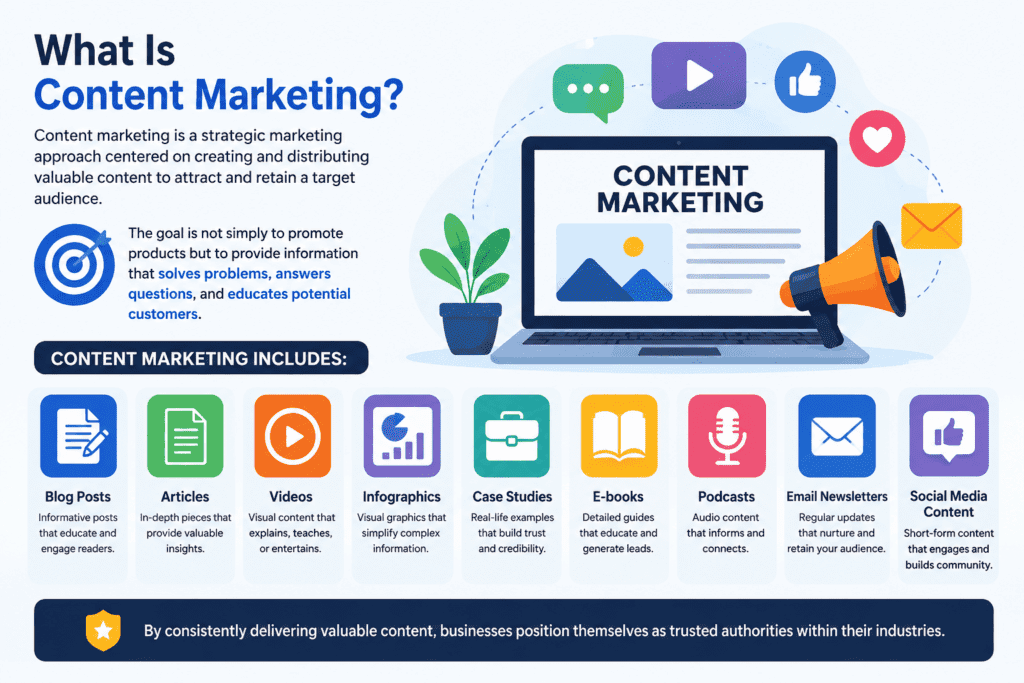
What Is Content Marketing?
Content marketing is a strategic marketing approach centered on creating and distributing valuable content to attract and retain a target audience.
The goal is not simply to promote products but to provide information that solves problems, answers questions, and educates potential customers.
Content marketing includes:
- Blog posts
- Articles
- Videos
- Infographics
- Case studies
- E-books
- Podcasts
- Email newsletters
- Social media content
By consistently delivering valuable content, businesses position themselves as trusted authorities within their industries.
Why Invest in Content Marketing?
The simple answer is that content marketing creates long-term business value.
Unlike traditional advertising that stops producing results once spending ends, content remains available online and continues attracting visitors, leads, and customers over time.
When businesses invest in quality content, they build digital assets that generate ongoing returns.
Let’s explore the key reasons why investing in content marketing is one of the smartest business decisions.
Content Marketing Builds Brand Awareness
One of the primary reasons companies invest in content marketing is increased brand visibility.
Consumers rarely purchase from brands they have never heard of. Before buying, people often research products, compare options, and seek trustworthy information.
Every blog post, video, guide, or social media update provides another opportunity for potential customers to discover your brand.
The more useful content you publish, the more frequently your business appears in search results and social media feeds. Over time, this consistent exposure strengthens brand recognition and awareness.
Content Marketing Improves Search Engine Rankings
Search engine optimization and content marketing work together.
Search engines prioritize websites that consistently publish high-quality, relevant, and helpful content.
When you create content targeting valuable keywords, your website has a greater chance of appearing in search results for relevant queries.
Benefits include:
- Increased organic traffic
- Better keyword rankings
- Higher domain authority
- More indexed pages
- Improved user engagement
For businesses wondering why invest in content marketing, improved search visibility is often one of the most compelling reasons.
Organic traffic generated through content marketing can provide a continuous stream of visitors without ongoing advertising costs.
Content Marketing Generates High-Quality Leads
Not all website visitors are equal.
Content marketing attracts people who are actively searching for information related to your products or services. These users often have a genuine interest in what your business offers.
For example, someone reading an article about SEO strategies is more likely to be interested in SEO services than someone who accidentally clicks an advertisement.
By targeting specific audience needs, content marketing helps attract qualified leads that are more likely to convert into paying customers.
Content Builds Trust and Credibility
Trust is a critical factor in purchasing decisions.
Consumers are more likely to buy from businesses they perceive as knowledgeable and reliable.
Publishing informative content demonstrates expertise and showcases your understanding of customer challenges.
When readers consistently find helpful information on your website, they begin viewing your brand as a trusted source.
Trust-building content includes:
- Educational articles
- Industry insights
- Research reports
- Expert opinions
- Case studies
- Customer success stories
Over time, this trust becomes a major competitive advantage.
Content Marketing Supports the Entire Customer Journey
Customers move through several stages before making a purchase.
These stages generally include:
- Awareness
- Consideration
- Decision
- Retention
Content marketing can support every stage of this journey.
Awareness content introduces potential customers to your brand.
Consideration content helps them evaluate solutions.
Decision-stage content encourages conversions.
Retention content keeps existing customers engaged and loyal.
Because content serves multiple purposes throughout the buying process, it becomes an essential business growth tool.
Content Marketing Delivers Long-Term ROI
Unlike paid advertising, content marketing provides compounding returns.
A well-written article can continue generating traffic for months or even years after publication.
Each piece of content becomes a long-term asset that contributes to business growth.
As your content library expands, your website gains more opportunities to rank for relevant searches.
This creates a snowball effect where traffic, leads, and conversions continue increasing over time.
For businesses evaluating marketing budgets, this long-term return on investment is a major reason why invest in content marketing.
Content Marketing Costs Less Than Traditional Advertising
Traditional advertising often requires significant financial investment.
Television ads, radio commercials, print advertising, and billboards can quickly become expensive.
Content marketing generally costs less while delivering sustainable results.
Although creating quality content requires time and resources, its long lifespan often produces a higher return compared to short-term advertising campaigns.
Businesses can continue benefiting from content long after publication without paying recurring advertising fees.
Content Marketing Increases Website Traffic
Every piece of content creates another entry point into your website.
More content means more opportunities to rank in search engines, appear in social media feeds, and attract backlinks.
As website traffic grows, businesses gain more opportunities to generate leads and sales.
Consistent content publishing helps create a steady stream of visitors who are actively seeking information related to your industry.
This organic traffic often converts better because users arrive with genuine interest and intent.
Content Marketing Strengthens Customer Relationships
Modern consumers expect more than promotional messages.
They want brands that educate, inform, and provide genuine value.
Content marketing helps businesses maintain ongoing communication with their audience.
Regular blog posts, newsletters, videos, and social updates keep customers engaged and connected.
This ongoing relationship encourages repeat purchases and increases customer loyalty.
Customers who trust a brand are more likely to recommend it to others, creating additional growth opportunities.
Content Marketing Establishes Industry Authority
Authority plays a significant role in customer decision-making.
People naturally trust businesses that demonstrate expertise.
Publishing high-quality content allows companies to showcase their knowledge and leadership within their industries.
Over time, businesses become recognized as reliable sources of information.
This authority can lead to:
- Increased customer trust
- More partnership opportunities
- Greater media exposure
- Higher conversion rates
- Stronger brand reputation
Industry authority often becomes a major competitive advantage.
Content Supports Social Media Marketing
Social media platforms require a constant flow of content.
Without valuable content, maintaining an active social presence becomes difficult.
Content marketing provides material that can be repurposed across multiple channels.
A single blog post can become:
- Social media posts
- Short videos
- Infographics
- Email campaigns
- Webinar topics
This maximizes content value while supporting broader marketing efforts.
Content Marketing Encourages Backlinks
Backlinks remain one of the most important ranking factors in SEO.
High-quality content naturally attracts links from other websites.
When businesses publish original research, comprehensive guides, or valuable insights, other websites often reference and link to those resources.
These backlinks improve search engine rankings and increase website authority.
The stronger your content, the greater your opportunity to earn quality backlinks.
Content Marketing Improves Conversion Rates
Educational content helps customers make informed decisions.
When users understand the benefits of your products or services, they feel more confident purchasing from your business.
Content addresses objections, answers questions, and provides clarity.
As a result, visitors are more likely to take desired actions such as:
- Filling out forms
- Requesting consultations
- Downloading resources
- Signing up for newsletters
- Making purchases
Improved conversion rates contribute directly to revenue growth.
Content Provides Valuable Customer Insights
Content marketing generates useful data about customer interests and behavior.
Businesses can analyze:
- Most popular topics
- Search queries
- Engagement metrics
- Conversion paths
- Audience preferences
These insights help refine marketing strategies and improve future content creation.
Understanding what customers want enables businesses to make more informed decisions and deliver better experiences.
Content Marketing Creates Competitive Advantage
Many businesses still underestimate the power of content marketing.
Companies that consistently publish valuable content often outperform competitors who rely solely on traditional advertising.
A strong content strategy helps businesses dominate search results, build authority, and attract customers before competitors have the opportunity.
Over time, this creates a significant market advantage.
Why Small Businesses Should Invest in Content Marketing
Content marketing is especially beneficial for small businesses with limited budgets.
Unlike expensive advertising campaigns, content marketing allows smaller organizations to compete with larger brands.
A well-researched blog post can rank alongside content from major corporations.
By focusing on expertise, quality, and audience needs, small businesses can build visibility and credibility without massive marketing budgets.
This accessibility makes content marketing one of the most effective growth strategies for businesses of all sizes.
Common Content Marketing Mistakes to Avoid
To maximize results, businesses should avoid common mistakes such as:
- Publishing inconsistent content
- Ignoring SEO best practices
- Creating overly promotional content
- Failing to understand audience needs
- Neglecting content updates
- Ignoring performance analytics
Successful content marketing requires planning, consistency, and ongoing optimization.
How to Start a Successful Content Marketing Strategy
Businesses beginning their content marketing journey should focus on:
Define Clear Goals
Identify what you want to achieve, such as traffic growth, lead generation, or brand awareness.
Understand Your Audience
Research customer needs, challenges, and interests.
Conduct Keyword Research
Find relevant keywords your audience searches for regularly.
Create High-Quality Content
Focus on providing value rather than promoting products excessively.
Optimize for SEO
Use proper headings, internal links, meta descriptions, and keyword placement.
Promote Content
Share content through social media, email marketing, and outreach campaigns.
Measure Results
Track traffic, engagement, leads, and conversions to evaluate performance.
The Future of Content Marketing
Content marketing continues evolving as technology and consumer behavior change.
Artificial intelligence, personalized experiences, interactive content, and video marketing are shaping the future of digital content.
Despite these changes, one principle remains constant: audiences value useful and relevant information.
Businesses that consistently provide value will continue benefiting from content marketing regardless of industry trends.
Conclusion
Understanding why invest in content marketing is essential for businesses seeking sustainable growth in today’s digital environment. Content marketing increases brand awareness, improves search rankings, generates qualified leads, builds trust, and supports every stage of the customer journey.
Unlike short-term advertising campaigns, quality content continues delivering value long after publication. It becomes a long-term business asset that attracts traffic, nurtures prospects, and strengthens customer relationships.
Organizations that invest in content marketing today position themselves for greater visibility, authority, and profitability in the future. Whether you operate a small startup or a global enterprise, content marketing remains one of the most effective strategies for achieving lasting success.
FAQ
Why invest in content marketing instead of paid advertising?
Content marketing provides long-term value and continues generating traffic and leads after publication, whereas paid advertising stops producing results once the budget is exhausted.
How long does content marketing take to show results?
Most businesses begin seeing noticeable improvements within three to six months, although significant growth often occurs over a longer period.
Is content marketing suitable for small businesses?
Yes. Content marketing allows small businesses to compete with larger companies by demonstrating expertise and attracting targeted audiences through valuable content.
How often should businesses publish content?
Consistency is more important than frequency. Many businesses achieve success by publishing one to four high-quality pieces of content per month.
Does content marketing help SEO?
Absolutely. Content marketing supports SEO by targeting keywords, attracting backlinks, improving engagement metrics, and increasing search visibility.
What types of content perform best?
Blog posts, guides, videos, case studies, research reports, and educational resources often generate strong engagement and long-term results.

James Robert
James Robert is a seasoned Off-Page SEO expert specializing in strategic link building, digital outreach, and authority growth for businesses aiming to improve search visibility and rankings. With over five years of hands-on experience, he helps brands strengthen their online presence through high-quality backlinks, niche-relevant placements, and ethical SEO practices aligned with Google’s guidelines. James’s core specialties include guest posting, blogger outreach, niche edits, brand mentions, and backlink profile optimization. He is highly skilled at building relationships with authoritative publishers and executing scalable outreach campaigns that drive long-term organic growth. As a contributor to leading marketing platforms, James regularly shares actionable insights on off-page SEO strategies, link acquisition, and sustainable ranking improvements, helping businesses achieve consistent and measurable SEO success.