

Modern consumers expect more from businesses than quality products and services. They want transparency, ethical practices, environmental responsibility, and meaningful action. As sustainability becomes a major factor in purchasing decisions, brands must find effective ways to communicate their values. This is where sustainability content marketing plays a crucial role.
Sustainability content marketing is the practice of creating and distributing content that highlights a company’s environmental, social, and ethical initiatives while providing valuable information to its audience. It helps organizations connect with conscious consumers, strengthen brand reputation, and build lasting relationships.
Companies across industries are increasingly adopting sustainable practices, but simply implementing these initiatives is not enough. Businesses must communicate their efforts clearly, authentically, and consistently. Through strategic content marketing, brands can educate audiences, showcase impact, and inspire positive action.
This comprehensive guide explores everything businesses need to know about sustainability content marketing, including its benefits, strategies, best practices, challenges, and future trends.
What Is Sustainability Content Marketing?
Sustainability content marketing involves creating content that promotes environmental responsibility, social impact, ethical business practices, and sustainable development while providing value to customers.
Unlike traditional promotional content, sustainability-focused content aims to educate, inspire, and engage audiences around topics that matter to society and the planet.
Examples include:
Blog posts about reducing carbon footprints
Case studies highlighting sustainable business initiatives
Videos showcasing ethical sourcing processes
Social media campaigns promoting environmental awareness
Reports detailing sustainability achievements
Educational resources on responsible consumption
The goal is not only to market products but also to demonstrate a company’s commitment to creating positive change.
Why Sustainability Matters in Modern Marketing
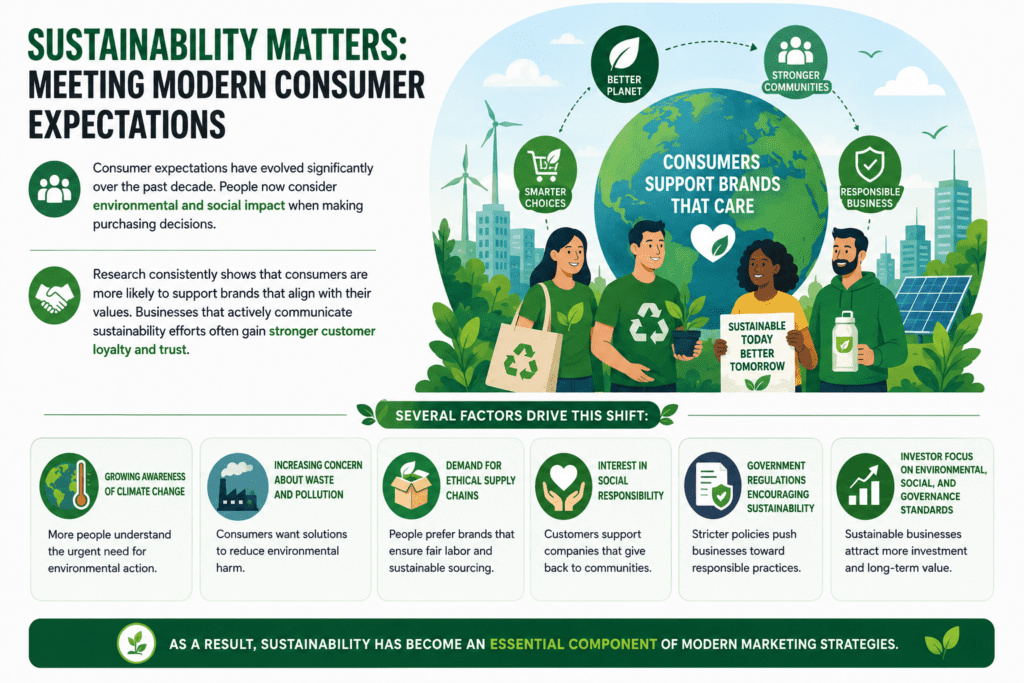
Consumer expectations have evolved significantly over the past decade. People now consider environmental and social impact when making purchasing decisions.
Research consistently shows that consumers are more likely to support brands that align with their values. Businesses that actively communicate sustainability efforts often gain stronger customer loyalty and trust.
Several factors drive this shift:
Growing awareness of climate change
Increasing concern about waste and pollution
Demand for ethical supply chains
Interest in social responsibility
Government regulations encouraging sustainability
Investor focus on environmental, social, and governance standards
As a result, sustainability has become an essential component of modern marketing strategies.
The Connection Between Sustainability and Content Marketing
Content marketing and sustainability complement each other naturally.
Content marketing focuses on providing valuable information that builds relationships with audiences. Sustainability initiatives provide meaningful stories worth sharing.
When combined effectively, they create powerful opportunities to:
Educate customers
Build trust
Increase engagement
Differentiate from competitors
Support brand positioning
Drive long-term loyalty
Instead of relying solely on advertisements, companies can use informative content to demonstrate their commitment to sustainability and establish credibility.
Benefits of Sustainability Content Marketing
Builds Consumer Trust
Trust is one of the most valuable assets a brand can possess.
Consumers are often skeptical of marketing claims, especially regarding environmental responsibility. Transparent and informative sustainability content helps establish credibility by showing real actions and measurable outcomes.
When brands openly discuss their sustainability journey, including successes and challenges, audiences are more likely to trust them.
Enhances Brand Reputation
A strong sustainability strategy can significantly improve public perception.
Businesses that consistently share meaningful sustainability content position themselves as responsible and forward-thinking organizations.
Positive brand reputation often leads to:
Higher customer retention
Improved public relations
Stronger community support
Increased media attention
Greater customer advocacy
Improves Search Engine Optimization
Sustainability-related topics are increasingly popular in search engines.
Creating high-quality content around sustainability can help businesses rank for relevant keywords and attract organic traffic.
Examples include content about:
Renewable energy
Green business practices
Sustainable packaging
Carbon reduction
Circular economy
Environmental responsibility
A well-planned sustainability content marketing strategy can support both branding and SEO goals simultaneously.
Attracts Environmentally Conscious Consumers
Many consumers actively seek brands that prioritize sustainability.
By creating educational and informative content, businesses can connect with audiences who value ethical and environmentally responsible practices.
These customers often become loyal supporters because they share the brand’s values.
Supports Customer Education
Sustainability can be a complex topic.
Content marketing helps simplify important concepts and empowers consumers to make informed decisions.
Educational content can explain:
Environmental impacts
Product lifecycle considerations
Responsible consumption habits
Sustainable alternatives
Industry innovations
This educational approach creates stronger customer relationships.
Increases Engagement
People are naturally drawn to meaningful stories.
Content focused on sustainability often generates higher engagement because it addresses issues that matter to consumers personally.
This can lead to:
More social shares
Longer website visits
Higher comment rates
Increased discussions
Stronger audience participation
Core Principles of Effective Sustainability Content Marketing
Authenticity
Authenticity is the foundation of successful sustainability communication.
Consumers can quickly identify exaggerated or misleading claims.
Brands should focus on genuine efforts rather than attempting to appear perfect.
Authentic content includes:
Real data
Transparent reporting
Honest storytelling
Verified achievements
Acknowledgment of challenges
Transparency
Transparency builds credibility.
Businesses should provide clear information about sustainability goals, progress, and areas for improvement.
Transparent communication reduces skepticism and strengthens audience confidence.
Consistency
Sustainability should not be treated as a one-time campaign.
Consistent messaging across all content channels reinforces commitment and demonstrates long-term dedication.
Regular updates help maintain trust and engagement.
Value-Driven Content
Effective sustainability content prioritizes audience value rather than self-promotion.
Instead of constantly highlighting company achievements, businesses should focus on helping readers learn, understand, and take action.
Storytelling
Stories make sustainability more relatable.
Rather than presenting statistics alone, brands should share real-world examples that illustrate impact and inspire audiences.
Strong storytelling creates emotional connections that drive engagement.
Types of Sustainability Content
Educational Blog Posts
Blogs remain one of the most effective content formats.
Educational articles can cover:
Sustainability trends
Environmental challenges
Industry innovations
Practical tips
Consumer guides
Thought leadership
These articles help establish expertise while attracting organic traffic.
Case Studies
Case studies demonstrate real results.
They show how sustainability initiatives create measurable outcomes for businesses, communities, and the environment.
Readers often find practical examples more convincing than general claims.
Sustainability Reports
Annual sustainability reports provide detailed insights into organizational performance.
These reports can be transformed into multiple content assets, including blog posts, infographics, videos, and social media updates.
Videos
Video content makes sustainability topics easier to understand.
Popular formats include:
Behind-the-scenes footage
Documentaries
Interviews
Project highlights
Educational explainers
Video content often generates strong engagement and sharing.
Infographics
Complex sustainability information can be difficult to digest.
Infographics simplify data and make important information more accessible.
They are especially effective for social media and presentations.
Social Media Campaigns
Social media platforms provide opportunities to engage audiences directly.
Brands can share:
Sustainability milestones
Educational tips
Employee initiatives
Environmental awareness campaigns
Community involvement activities
Consistent social media content helps maintain visibility and engagement.
How to Create a Sustainability Content Marketing Strategy
Define Clear Objectives
Start by identifying specific goals.
Common objectives include:
Building awareness
Increasing engagement
Improving brand reputation
Generating leads
Supporting SEO efforts
Strengthening customer loyalty
Clear objectives guide content creation and measurement.
Understand Your Audience
Different audiences have different sustainability interests.
Conduct research to understand:
Customer values
Environmental concerns
Content preferences
Information needs
Buying behaviors
Audience insights help create more relevant content.
Identify Key Sustainability Topics
Choose topics that align with both business values and audience interests.
Examples include:
Climate action
Renewable energy
Sustainable sourcing
Waste reduction
Circular economy
Ethical labor practices
Community impact
Content should reflect genuine organizational priorities.
Develop a Content Calendar
Consistency is essential.
A content calendar helps organize:
Publishing schedules
Content themes
Campaign timelines
Seasonal opportunities
Performance reviews
Planning ensures regular communication and better resource management.
Measure Performance
Track key metrics to evaluate effectiveness.
Important measurements include:
Organic traffic
Engagement rates
Time on page
Social shares
Lead generation
Conversion rates
Brand sentiment
Continuous analysis helps improve future content.
Common Sustainability Content Marketing Mistakes
Greenwashing
Greenwashing occurs when companies exaggerate or misrepresent sustainability efforts.
This is one of the fastest ways to damage trust.
Avoid making claims that cannot be verified with evidence.
Focusing Only on Achievements
Audiences appreciate honesty.
Businesses should share both successes and ongoing challenges rather than presenting an unrealistic image of perfection.
Ignoring Data
Unsupported claims reduce credibility.
Whenever possible, provide measurable results and evidence to support sustainability statements.
Using Excessive Jargon
Complex terminology can confuse audiences.
Use clear and accessible language that makes sustainability concepts easy to understand.
Lack of Consistency
Publishing sustainability content occasionally is not enough.
Consistent communication demonstrates genuine commitment and keeps audiences engaged.
Sustainability Content Marketing and SEO
SEO and sustainability content work exceptionally well together.
Many sustainability-related searches continue to grow globally, creating opportunities for organic visibility.
SEO best practices include:
Keyword research
High-quality content creation
Internal linking
Optimized headings
Mobile-friendly design
Fast page speed
Strong user experience
Relevant keywords should be integrated naturally throughout content without over-optimization.
Businesses implementing sustainability content marketing effectively often benefit from increased visibility and long-term organic traffic growth.
Future Trends in Sustainability Content Marketing
Increased Demand for Transparency
Consumers will continue demanding detailed information about environmental and social impact.
Brands that provide transparent reporting will gain competitive advantages.
Data-Driven Storytelling
Organizations will increasingly combine storytelling with measurable sustainability outcomes.
Data-backed content improves credibility and trust.
Interactive Content
Interactive experiences such as calculators, assessments, and sustainability trackers will become more popular.
These tools increase engagement and provide personalized value.
Employee Advocacy
Employees can be powerful sustainability ambassadors.
Organizations will increasingly feature employee stories and perspectives in content strategies.
Artificial Intelligence and Sustainability
AI tools will help businesses analyze performance, identify trends, personalize content, and improve sustainability communication.
Greater Focus on Social Impact
Sustainability discussions will extend beyond environmental issues to include:
Diversity and inclusion
Community development
Ethical governance
Workplace well-being
Human rights
Brands will need to address broader social responsibility topics.
How Small Businesses Can Use Sustainability Content Marketing
Sustainability content marketing is not limited to large corporations.
Small businesses can achieve meaningful results by focusing on authentic actions and community engagement.
Effective approaches include:
Sharing local sustainability initiatives
Highlighting responsible sourcing practices
Publishing educational content
Showcasing community involvement
Promoting waste reduction efforts
Supporting environmental causes
Even small actions can create compelling stories when communicated effectively.
Building Long-Term Success with Sustainability Content
Long-term success requires commitment rather than short-term campaigns.
Businesses should:
Set realistic goals
Measure progress regularly
Communicate transparently
Educate audiences consistently
Adapt strategies as expectations evolve
Organizations that integrate sustainability into their overall brand identity are more likely to achieve lasting results.
A strong sustainability content marketing strategy helps brands remain relevant, trusted, and competitive in a rapidly changing marketplace.
Conclusion
Sustainability is no longer a niche topic. It has become a major influence on consumer behavior, business strategy, and brand perception worldwide. Organizations that communicate their sustainability efforts effectively can build stronger relationships, improve credibility, and create long-term value.
Sustainability content marketing enables businesses to educate audiences, share authentic stories, demonstrate accountability, and showcase positive impact. By focusing on transparency, consistency, and meaningful engagement, companies can differentiate themselves in crowded markets while contributing to a more sustainable future.
As consumer expectations continue to evolve, sustainability-focused content will become increasingly important. Brands that invest in authentic sustainability communication today will be better positioned to earn trust, drive engagement, and achieve sustainable growth for years to come.
FAQ
What is sustainability content marketing?
Sustainability content marketing is the practice of creating valuable content that highlights a company’s environmental, social, and ethical initiatives while educating and engaging audiences.
Why is sustainability content marketing important?
It helps businesses build trust, strengthen brand reputation, attract conscious consumers, improve SEO performance, and support long-term customer relationships.
How can businesses avoid greenwashing?
Companies should provide accurate information, use verifiable data, communicate transparently, and avoid making exaggerated sustainability claims.
What types of content work best for sustainability marketing?
Blog posts, videos, case studies, sustainability reports, social media campaigns, infographics, and educational guides are among the most effective formats.
Does sustainability content marketing help SEO?
Yes. Sustainability-related topics attract significant search interest, and high-quality content can improve organic visibility, keyword rankings, and website traffic.
Can small businesses benefit from sustainability content marketing?
Absolutely. Small businesses can build trust and differentiate themselves by sharing authentic sustainability efforts, community involvement, and responsible business practices.
How often should sustainability content be published?
Consistency is more important than frequency. Businesses should maintain a regular publishing schedule that aligns with their resources and audience expectations.
What is the biggest challenge in sustainability content marketing?
Maintaining authenticity and transparency is often the biggest challenge. Consumers expect genuine communication supported by evidence and measurable results.

James Robert
James Robert is a seasoned Off-Page SEO expert specializing in strategic link building, digital outreach, and authority growth for businesses aiming to improve search visibility and rankings. With over five years of hands-on experience, he helps brands strengthen their online presence through high-quality backlinks, niche-relevant placements, and ethical SEO practices aligned with Google’s guidelines. James’s core specialties include guest posting, blogger outreach, niche edits, brand mentions, and backlink profile optimization. He is highly skilled at building relationships with authoritative publishers and executing scalable outreach campaigns that drive long-term organic growth. As a contributor to leading marketing platforms, James regularly shares actionable insights on off-page SEO strategies, link acquisition, and sustainable ranking improvements, helping businesses achieve consistent and measurable SEO success.